
The Invisible Alchemy: How Hydrogen Fuel Cells and Smart Charging Infrastructure Are Crafting the Future of Carbon Neutral Mobility
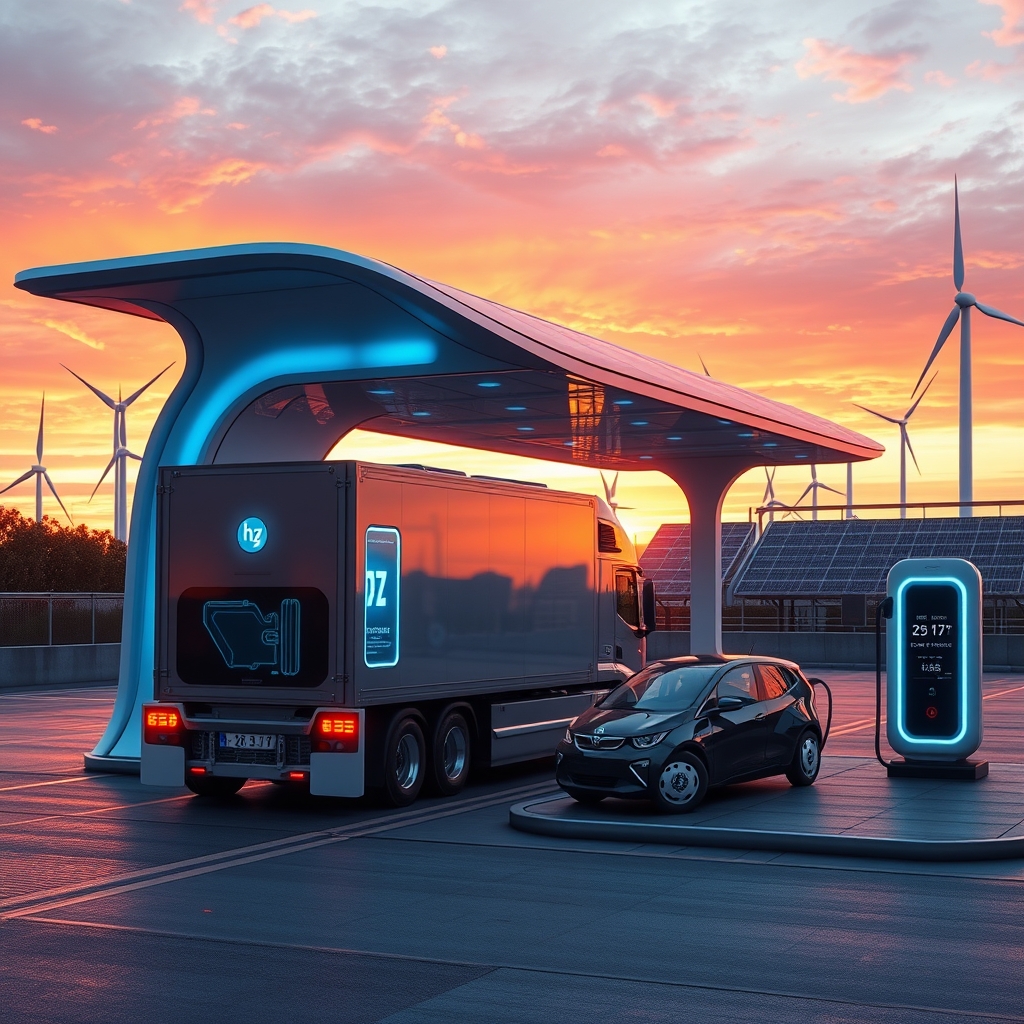
The transportation sector stands at a crossroads, where the urgency of climate action meets the relentless march of technological innovation. While electric vehicles (EVs) have captured the public imagination as the vanguard of sustainable mobility, a quieter revolution is unfolding—one that blends the promise of hydrogen fuel cells with the intelligence of smart charging infrastructure. Together, these technologies are not just reducing emissions but redefining what it means to move people and goods in a carbon-neutral world.
The Hydrogen Advantage: Beyond the Hype
Hydrogen fuel cells have long been touted as the holy grail of zero-emission mobility, and for good reason. Unlike battery-electric vehicles, which rely on stored electricity, fuel cells generate power on-demand through a chemical reaction between hydrogen and oxygen, emitting only water vapor as a byproduct. This process offers several distinct advantages, particularly for applications where weight, range, and refueling time are critical.
For heavy-duty transport—think long-haul trucks, ships, and even aircraft—hydrogen’s energy density makes it a compelling alternative to diesel. A hydrogen-powered truck can refuel in minutes, much like its fossil-fueled counterpart, and travel hundreds of miles without the weight penalty of a massive battery pack. Companies like Nikola and Hyundai are already deploying fuel cell trucks in pilot programs, proving that hydrogen is more than just a laboratory experiment. Meanwhile, in aviation, startups like ZeroAvia are testing hydrogen-electric powertrains that could one day make short-haul flights entirely emissions-free.
The Infrastructure Challenge
Yet, for all its potential, hydrogen faces a chicken-and-egg dilemma: without widespread refueling infrastructure, adoption remains limited, and without adoption, investment in infrastructure stalls. This is where smart charging infrastructure—originally developed for EVs—enters the picture. By leveraging the same digital backbone that powers EV charging networks, hydrogen refueling stations can be integrated into a broader, interconnected energy ecosystem.
Smart charging platforms, equipped with AI-driven demand forecasting and dynamic pricing, can optimize the distribution of hydrogen across refueling networks. For example, a fleet of hydrogen-powered delivery trucks could receive real-time updates on the nearest available station, along with predictive maintenance alerts to ensure their fuel cells operate at peak efficiency. This level of integration doesn’t just solve the infrastructure problem—it transforms hydrogen from a niche solution into a scalable, mainstream option for carbon-neutral mobility.
The Synergy of Smart Charging and Hydrogen
The true magic happens when hydrogen fuel cells and smart charging infrastructure work in tandem. Consider a future where a city’s public transit system runs on hydrogen buses, while private vehicles—both EVs and fuel cell cars—share the same smart grid. Excess renewable energy from solar or wind farms could be used to produce green hydrogen via electrolysis, storing energy that can later be converted back into electricity or used directly in fuel cells. This creates a closed-loop system where energy is not just consumed but cycled efficiently, minimizing waste and maximizing sustainability.
Smart charging infrastructure also enables vehicle-to-grid (V2G) technology, where EVs and fuel cell vehicles can feed energy back into the grid during peak demand. For hydrogen-powered vehicles, this could mean using their fuel cells to generate electricity when parked, turning them into mobile power plants. Imagine a fleet of hydrogen trucks parked at a distribution center, not just waiting for their next delivery but actively stabilizing the local energy grid. This kind of flexibility is essential for building a resilient, decentralized energy system.
Overcoming the Barriers
Of course, challenges remain. Green hydrogen—produced using renewable energy—is still more expensive than its fossil-based counterpart, though costs are falling rapidly as electrolysis technology improves. Meanwhile, the efficiency of fuel cells, while impressive, still lags behind batteries for certain applications. Yet, these hurdles are not insurmountable. Governments and private companies are investing billions in hydrogen hubs, research, and pilot projects, signaling a growing recognition of its role in the energy transition.
Another critical factor is public perception. Hydrogen has long been associated with safety concerns, despite its excellent safety record in industrial applications. Education and transparency will be key to overcoming this stigma. Initiatives like the Hydrogen Council, a global coalition of energy and transport companies, are working to demystify the technology and highlight its benefits. As more hydrogen-powered vehicles hit the road—and as smart infrastructure makes refueling as seamless as charging an EV—skepticism will likely give way to acceptance.
A Dual Path to Zero Emissions
The future of carbon-neutral mobility is not an either-or proposition. Batteries and hydrogen are complementary technologies, each suited to different use cases. While EVs dominate the passenger car market, hydrogen is poised to revolutionize industries where batteries fall short. The real breakthrough, however, lies in the infrastructure that supports both. Smart charging networks, with their ability to manage energy flows, optimize demand, and integrate renewables, are the invisible threads weaving these technologies into a cohesive, sustainable ecosystem.
As cities grow smarter and grids become more flexible, the line between EVs and hydrogen vehicles will blur. Drivers won’t need to choose between plugging in or filling up—they’ll simply use the most efficient, convenient option available. This seamless integration is the ultimate goal: a transportation system that is not just zero-emission but also intelligent, adaptive, and resilient. The road to carbon-neutral mobility is not a single path but a network of interconnected solutions, each playing its part in a larger transformation. And at the heart of this transformation is the quiet alchemy of hydrogen and smart infrastructure, turning the promise of sustainability into everyday reality.