The Thermal Efficiency Edge: How Advanced Powertrains and Smart Systems Are Redefining the Future of Eco-Friendly Driving
The quest for sustainable transportation has long been dominated by a singular focus: reducing emissions. Yet, as the automotive industry evolves, a more nuanced conversation is emerging—one that centers on thermal efficiency as the unsung hero of eco-friendly driving. While zero-emission vehicles (ZEVs) like electric and hydrogen fuel cell cars grab headlines, the reality is that the internal combustion engine (ICE) and hybrid powertrains still dominate global roads. The challenge, then, is not just to replace these systems but to make them smarter, cleaner, and more efficient than ever before.
The Science of Thermal Efficiency: Why It Matters
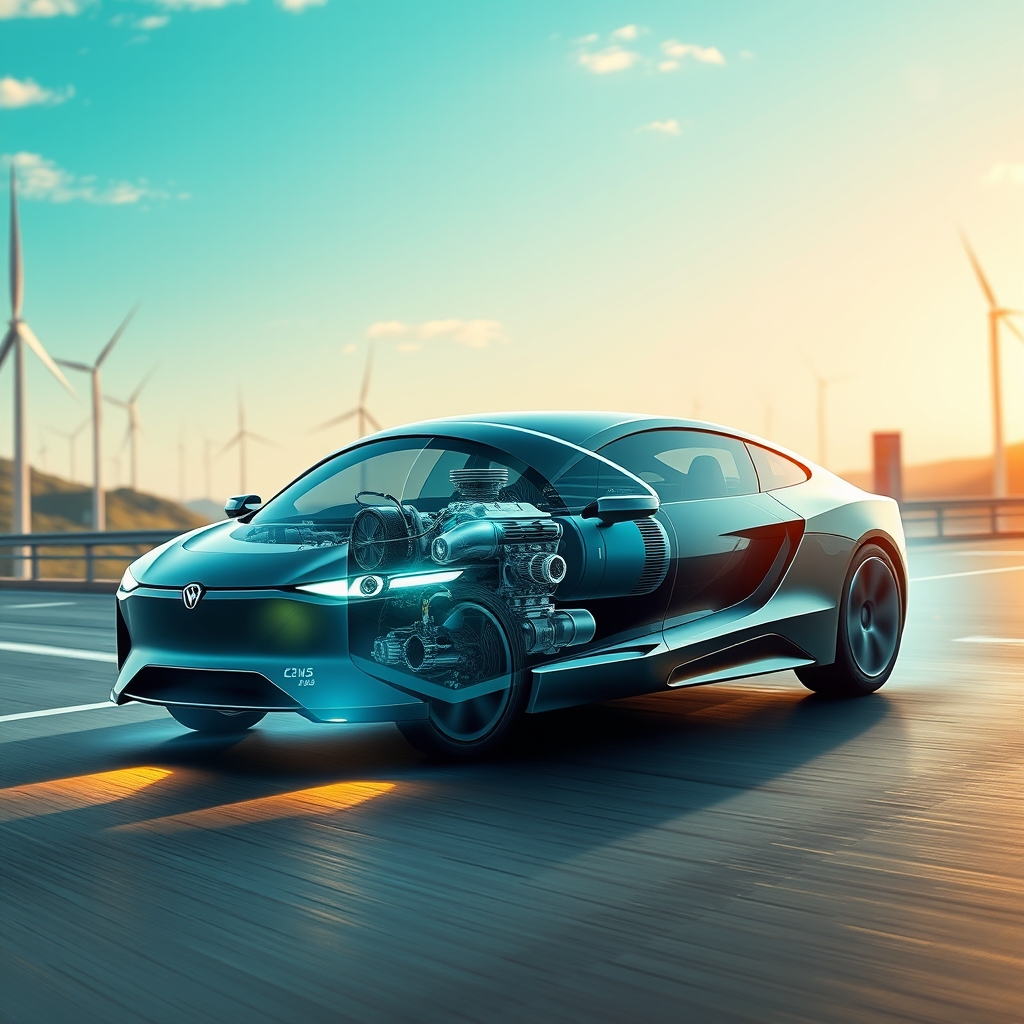
Thermal efficiency refers to how effectively an engine converts fuel into usable energy. Traditional ICEs typically operate at around 20-30% efficiency, meaning most of the energy from fuel is lost as heat or exhaust. However, advancements in turbocharged direct injection (TDI) and exhaust aftertreatment systems are pushing these boundaries. Modern TDI engines, for instance, can achieve efficiencies of up to 40% by optimizing combustion, reducing friction, and recovering waste heat. This isn’t just incremental progress—it’s a paradigm shift in how we think about the internal combustion engine’s role in a sustainable future.
But thermal efficiency isn’t just about the engine. It’s about the entire powertrain ecosystem. Hybrid systems, which combine ICEs with electric motors, leverage regenerative braking to recapture energy that would otherwise be lost. This synergy doesn’t just improve fuel economy; it redefines what’s possible for vehicles that still rely on liquid fuels, whether traditional gasoline, renewable diesel, or eco-friendly biofuels. The result? A bridge between today’s infrastructure and tomorrow’s zero-emission goals.
The Role of Smart Systems in Maximizing Efficiency
Efficiency gains don’t stop at hardware. The integration of connected car technology and autonomous driving systems is transforming how vehicles manage energy. Predictive algorithms, for example, can optimize routes to minimize fuel consumption, while adaptive cruise control adjusts speed based on traffic conditions to reduce unnecessary acceleration. These smart systems don’t just make driving more convenient—they make it more sustainable by ensuring that every drop of fuel or kilowatt-hour of electricity is used as efficiently as possible.
Another game-changer is the battery management system (BMS), which plays a critical role in both electric and hybrid vehicles. A well-designed BMS ensures that batteries operate within their optimal temperature range, extending their lifespan and improving overall efficiency. When paired with smart charging infrastructure, these systems can even leverage renewable energy sources, further reducing the carbon footprint of electric mobility. The BMS isn’t just a component; it’s the brain that ensures the entire powertrain operates at peak performance.
The Promise of Alternative Fuels
While electric vehicles dominate discussions about sustainability, the reality is that liquid fuels will remain a part of the transportation landscape for decades. This is where synthetic fuels and biofuels come into play. Synthetic fuels, produced using renewable energy and captured carbon dioxide, offer a carbon-neutral alternative to fossil fuels. When burned, they release only the CO₂ that was originally captured, creating a closed-loop system. Meanwhile, biofuels derived from organic waste or algae provide a renewable option that can be used in existing ICEs with minimal modifications.
The beauty of these fuels lies in their compatibility with current infrastructure. Unlike electric vehicles, which require new charging networks, or hydrogen fuel cells, which demand specialized refueling stations, synthetic and biofuels can be distributed through existing pipelines and gas stations. This makes them a pragmatic solution for reducing emissions in the short to medium term, particularly for heavy-duty vehicles and aviation, where electrification is less feasible.
The Road Ahead: A Multi-Path Approach to Sustainability
The future of sustainable transportation isn’t a one-size-fits-all solution. Instead, it’s a mosaic of technologies, each playing a role in reducing emissions and improving efficiency. Electric vehicles will continue to lead the charge in urban mobility, while hydrogen fuel cells may dominate long-haul trucking and shipping. Meanwhile, advanced ICEs and hybrid powertrains will serve as a critical bridge, ensuring that the transition to zero-emission mobility is both practical and inclusive.
At the heart of this transition is thermal efficiency—a metric that often goes unnoticed but holds the key to unlocking the full potential of every powertrain. By combining smarter engines, alternative fuels, and intelligent systems, the automotive industry is not just redefining what’s possible; it’s reimagining the very nature of mobility. The road ahead is complex, but with innovation as the compass, the destination—a carbon-neutral future—is within reach. The journey has only just begun, and the possibilities are as vast as the open road.