
The Invisible Edge: How Electronic Tuning and Precision Fueling Redefine Engine Potential
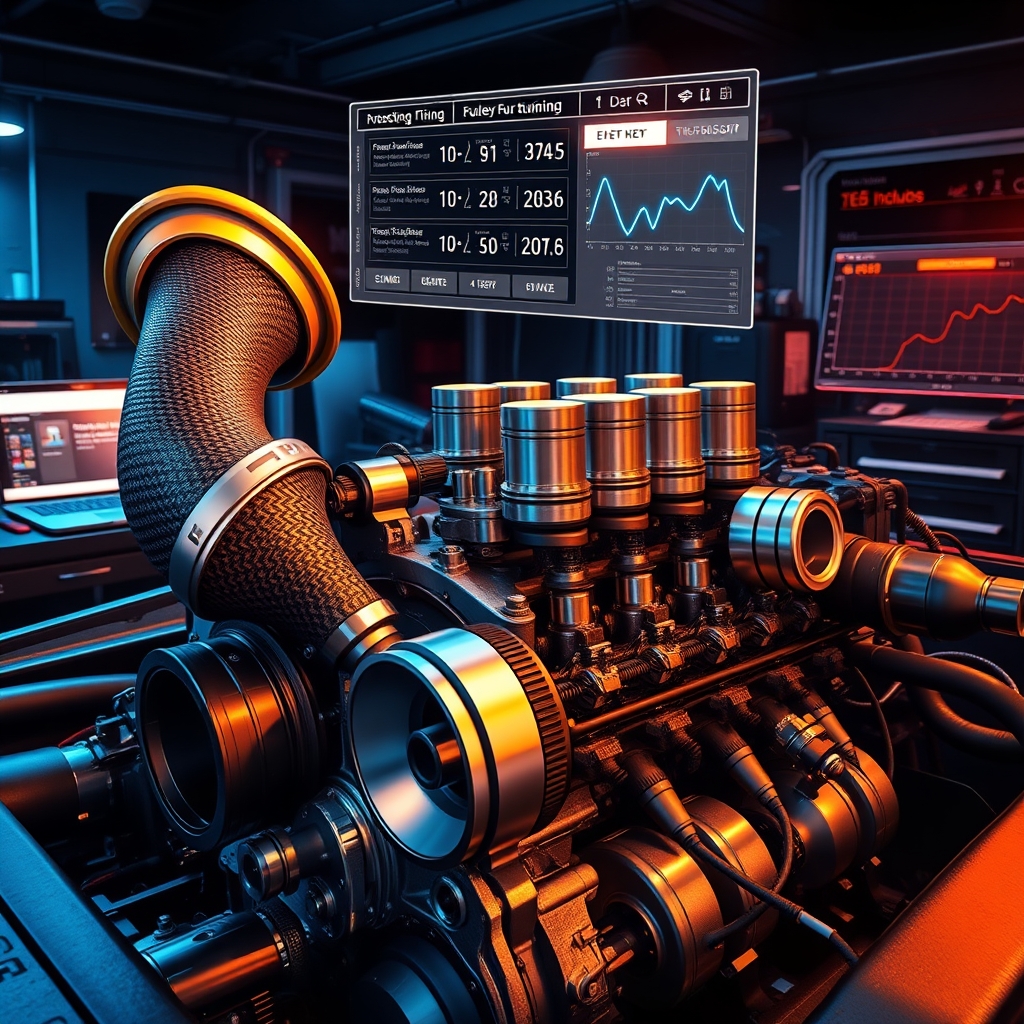
Every engine has a hidden reservoir of power, a latent potential that lies just beneath the surface of factory settings. For decades, enthusiasts have chased this untapped performance through mechanical modifications—bolting on turbochargers, swapping camshafts, or upgrading exhaust systems. Yet, one of the most transformative advancements in modern performance tuning remains largely invisible: the art and science of electronic control unit (ECU) remapping and precision fueling upgrades. These modifications don’t just add power; they redefine how an engine breathes, combusts, and delivers energy, turning a stock powertrain into a finely tuned machine capable of astonishing feats.
The Heart of the Matter: ECU Remapping
At the core of every modern engine lies the ECU, a sophisticated computer that governs everything from fuel delivery to ignition timing. Factory settings are designed with a broad audience in mind—balancing fuel efficiency, emissions compliance, and longevity—often at the expense of outright performance. ECU remapping, or “chipping,” involves recalibrating these parameters to unlock a engine’s true potential. By adjusting fuel maps, ignition timing, and boost levels, tuners can extract significant gains in horsepower and torque without altering a single mechanical component.
Forced induction engines, in particular, benefit immensely from remapping. A turbocharged or supercharged engine relies on precise air-fuel ratios and timing to avoid detonation while maximizing power. A well-executed remap can optimize these parameters, allowing the engine to run higher boost levels safely while improving throttle response and drivability. The result? A car that feels more responsive, pulls harder, and delivers a driving experience that feels entirely new.
The Role of Fueling: High-Flow Injectors and Upgraded Pumps
While ECU remapping adjusts how the engine *thinks*, fueling upgrades ensure it has the *resources* to perform. Stock fuel injectors and pumps are designed to meet the demands of a factory engine, but when power levels rise—whether through forced induction or high-compression pistons—these components often become the bottleneck. Upgrading to high-flow fuel injectors and a robust fuel pump ensures the engine receives the precise amount of fuel it needs, even under extreme conditions.
High-flow injectors, for example, can deliver fuel at rates far exceeding stock units, supporting higher horsepower outputs without running lean. Similarly, an upgraded fuel pump maintains consistent pressure, preventing fuel starvation during aggressive acceleration or high-RPM operation. When paired with a remapped ECU, these upgrades create a harmonious system where fuel delivery is perfectly synchronized with the engine’s demands, eliminating hesitation and maximizing efficiency.
Beyond the Basics: Advanced Fueling Strategies
For those pushing the boundaries of performance, advanced fueling strategies like methanol injection or ethanol blending offer even greater rewards. Methanol injection, for instance, introduces a fine mist of methanol into the intake tract, cooling the incoming air charge and increasing octane. This allows for more aggressive ignition timing and higher boost levels, unlocking power that would otherwise be limited by detonation. Similarly, running ethanol-blended fuels (such as E85) provides a higher octane rating and greater cooling properties, enabling tuners to extract even more performance from a forced induction setup.
These strategies aren’t just for race cars or extreme builds. Even daily-driven performance vehicles can benefit from the added safety margin and power potential of advanced fueling. The key lies in proper tuning—ensuring the ECU is calibrated to account for the unique properties of these fuels and their impact on combustion.
Precision Tuning: The Difference Between Power and Reliability
It’s easy to assume that more power always comes at the cost of reliability, but that’s only true when modifications are done haphazardly. The real magic of modern performance tuning lies in precision—balancing power gains with longevity. A well-tuned engine doesn’t just make more power; it does so while maintaining safe operating temperatures, optimal air-fuel ratios, and controlled cylinder pressures. This is where the synergy between ECU remapping and fueling upgrades becomes critical.
For example, a turbocharged engine running higher boost levels without proper fueling or timing adjustments risks detonation, a destructive phenomenon where fuel ignites prematurely, damaging pistons and cylinders. Conversely, an engine with upgraded fueling but a stock ECU may run rich, wasting fuel and reducing efficiency. The solution? A holistic approach where every modification—from the ECU to the fuel injectors—is calibrated to work in unison. This ensures that power gains are not only substantial but also sustainable.
The Future of Performance: Where Electronics Meet Mechanics
The line between mechanical and electronic tuning is blurring. Today’s performance engines are as much about software as they are about hardware. Innovations like electronic boost controllers, which allow real-time adjustments to turbocharger pressure, or adaptive ECU tuning, which adjusts parameters on the fly based on driving conditions, are pushing the boundaries of what’s possible. Even cylinder head porting and valve train upgrades, traditionally mechanical modifications, are now being optimized through data-driven tuning, ensuring that airflow and combustion are perfectly matched.
This convergence of electronics and mechanics is democratizing performance like never before. Enthusiasts no longer need a garage full of tools or a deep understanding of engine dynamics to unlock serious power. With the right tuning and fueling upgrades, even a modestly modified engine can deliver performance that rivals far more expensive builds. The key is understanding that power isn’t just about what you bolt on—it’s about how you calibrate, control, and refine the engine’s behavior.
As technology continues to evolve, the possibilities for engine tuning will only expand. What was once the domain of professional racers and elite tuners is now accessible to anyone with a passion for performance. The invisible edge—precision tuning and fueling—is no longer a secret. It’s a revolution, one that’s redefining what engines can do and how we experience the thrill of driving. Whether you’re chasing lap times, quarter-mile records, or simply the joy of a more responsive car, the path to power begins with understanding that the most transformative upgrades are often the ones you can’t see.