
The Heart of the Machine: How Advanced Engine Tuning and Forced Induction Unleash Raw Power
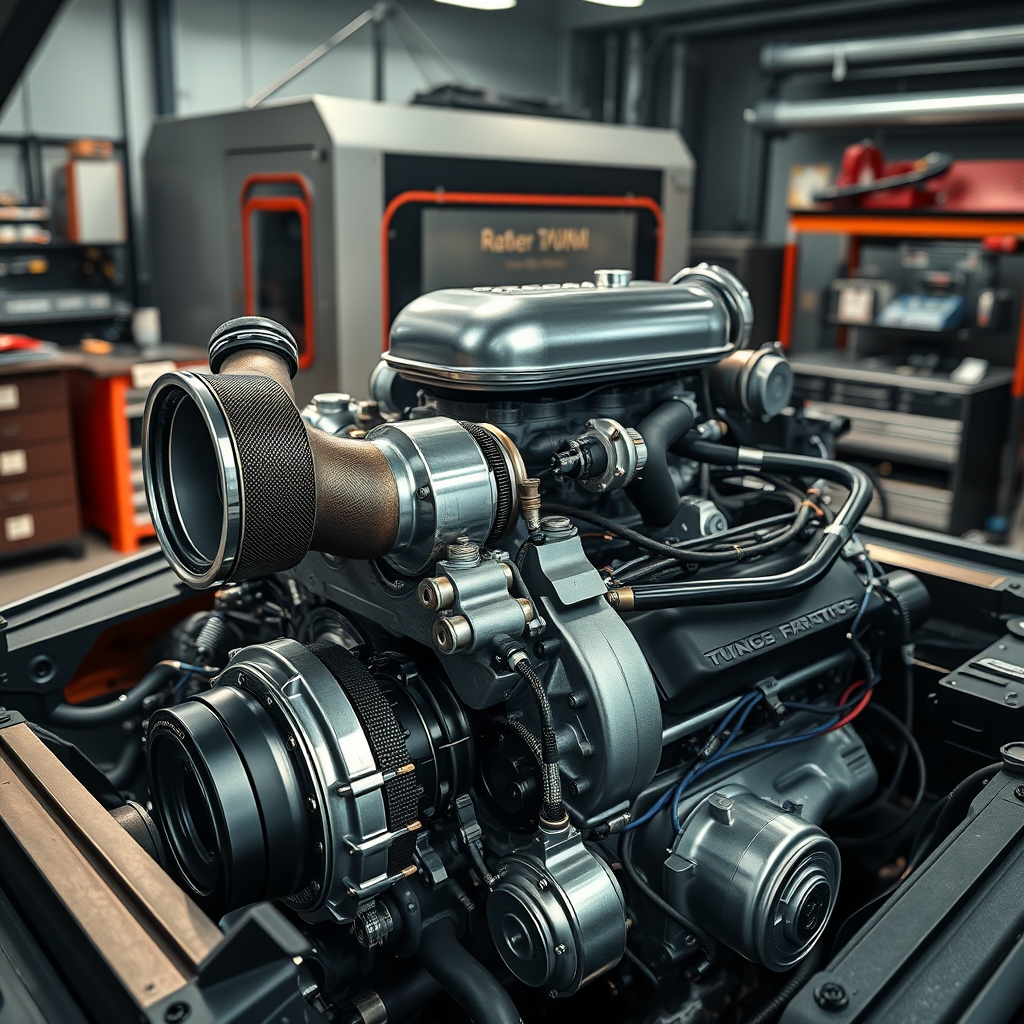
Every engine has untapped potential, a hidden reservoir of power waiting to be unlocked. For enthusiasts and performance seekers, the journey to extracting that power begins with understanding the synergy between advanced tuning and forced induction. These modifications don’t just enhance performance—they redefine what an engine is capable of, transforming a stock machine into a precision-tuned powerhouse. The key lies in balancing precision, reliability, and sheer driving exhilaration.
The Foundation: Electronic Control Unit Remapping
At the core of modern engine tuning is the Electronic Control Unit (ECU), the brain that governs fuel delivery, ignition timing, and airflow. Factory ECU settings are designed for a broad range of conditions, often leaving performance on the table. Remapping the ECU—whether through a custom tune or a performance-oriented off-the-shelf solution—optimizes these parameters for maximum efficiency and power. A well-executed remap can yield gains of 10-30% in horsepower and torque, all while improving throttle response and drivability.
However, ECU remapping isn’t a one-size-fits-all solution. The best results come from dyno-tuned adjustments, where real-time data fine-tunes the engine’s behavior under load. This process ensures that the engine operates within safe limits while pushing performance boundaries. For turbocharged engines, remapping often includes adjusting boost levels, allowing the turbo to spool faster and deliver power more linearly across the rev range.
Forced Induction: The Turbocharger and Supercharger Advantage
While ECU remapping optimizes existing airflow, forced induction systems—turbochargers and superchargers—force more air into the combustion chamber, enabling the engine to burn more fuel and produce significantly more power. Turbochargers, driven by exhaust gases, are the most common choice for their efficiency and ability to deliver substantial power gains without a significant increase in engine displacement. Upgrading to a larger turbo or a hybrid setup can unlock even greater performance, but it requires careful matching to the engine’s capabilities to avoid lag or excessive heat.
Superchargers, on the other hand, provide instant power delivery by mechanically compressing air, eliminating turbo lag. While they place more demand on the engine’s internals, they offer a linear power curve that’s ideal for high-performance applications. Both systems benefit from supporting modifications, such as upgraded intercoolers to reduce intake air temperatures and high-flow fuel injectors to ensure adequate fuel delivery under increased boost.
Supporting Modifications: The Unsung Heroes
Forced induction and ECU tuning are just the beginning. To handle the increased stress and power, engines require reinforcements. Upgraded intercoolers, for example, are critical for maintaining optimal intake temperatures, preventing heat soak, and ensuring consistent performance. Similarly, high-flow fuel injectors and upgraded fuel pumps ensure that the engine receives the precise fuel volume needed under high boost conditions, preventing lean conditions that could lead to catastrophic failure.
Performance exhaust systems play a dual role: they reduce backpressure, allowing the engine to breathe more freely, and they enhance the auditory experience of driving. A well-designed exhaust system can improve power output while giving the engine a deeper, more aggressive tone. Meanwhile, cold air intakes and carbon fiber air intakes optimize airflow into the engine, reducing restrictions and improving throttle response.
Internal Upgrades: Building a Stronger Foundation
For those pushing their engines to the absolute limit, internal upgrades are non-negotiable. Forged pistons, performance crankshafts, and upgraded valve trains are designed to withstand the increased pressures and temperatures of high-boost applications. High-compression pistons, for instance, increase the engine’s thermal efficiency, allowing it to extract more power from each combustion cycle. However, these upgrades often require precise tuning to avoid detonation, especially in forced induction setups.
Cylinder head porting is another advanced modification that improves airflow into and out of the combustion chamber. By smoothing and reshaping the intake and exhaust ports, airflow restrictions are minimized, allowing the engine to breathe more efficiently. This modification is particularly effective when paired with performance camshafts, which optimize valve lift and duration for improved power delivery at higher RPMs.
Precision Tuning: The Final Piece of the Puzzle
No amount of hardware upgrades can compensate for poor tuning. Precision tuning ensures that all modifications work in harmony, delivering power without sacrificing reliability. Methanol injection systems, for example, can be used to cool the intake charge and suppress detonation, allowing for higher boost levels and more aggressive timing. Electronic boost controllers provide fine-tuned control over turbocharger wastegates, enabling precise adjustments to match driving conditions.
Even seemingly minor upgrades, like high-performance spark plugs, play a role in maintaining optimal combustion efficiency. These plugs are designed to withstand higher temperatures and pressures, ensuring consistent ignition even under extreme conditions. When combined with a well-tuned ECU, they help maximize power while minimizing the risk of misfires or pre-ignition.
The pursuit of engine performance is a journey of precision, innovation, and relentless optimization. Whether through forced induction, advanced tuning, or internal upgrades, each modification brings the engine closer to its true potential. The result isn’t just more power—it’s a driving experience that’s sharper, more responsive, and undeniably exhilarating. Every component, from the smallest spark plug to the largest turbocharger, plays a role in transforming a machine into a masterpiece of engineering, where every revolution of the crankshaft is a testament to the art of performance.