
The Silent Architects of Combustion: How Fuel Injection Innovations Shape Modern Engines
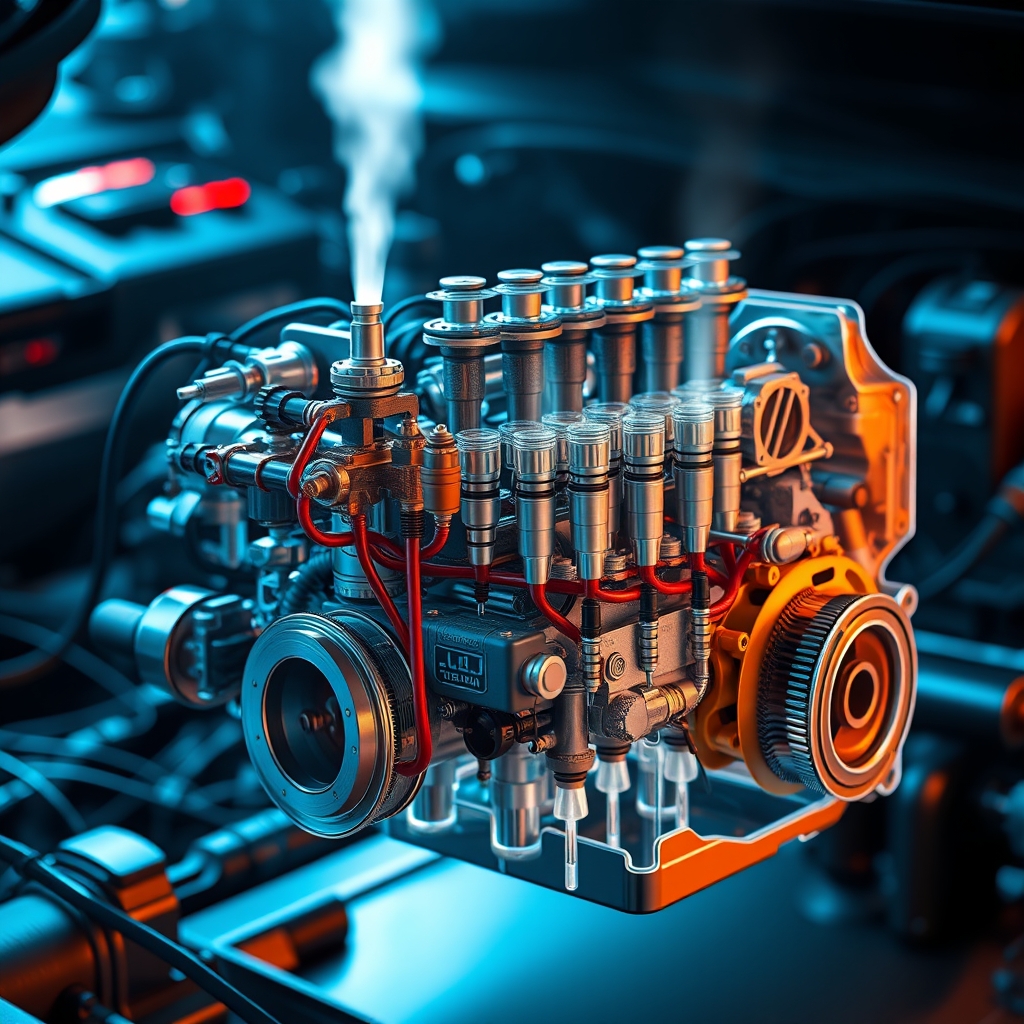
In the intricate ballet of internal combustion, where milliseconds dictate performance and efficiency, fuel injection systems stand as the silent architects of power. While drivers often focus on horsepower figures or turbocharger boost levels, the real magic happens in the unseen orchestration of fuel delivery—where precision engineering meets the relentless demands of modern engines. From the high-pressure symphony of direct injection to the adaptive intelligence of electronic fuel management, these systems have evolved far beyond their mechanical ancestors, becoming the unsung guardians of both performance and sustainability.
The Pressure Paradigm: Direct Fuel Injection and Its High-Stakes Environment
At the heart of modern direct fuel injection (DFI) systems lies a marvel of hydraulic engineering: the high-pressure fuel pump. Unlike traditional port injection, which sprays fuel into the intake manifold, DFI delivers fuel directly into the combustion chamber at pressures exceeding 2,000 bar—nearly 30,000 psi. This extreme environment demands components that can withstand not just pressure, but also the thermal and chemical stresses of modern fuels, including ethanol blends and biodiesel.
The high-pressure fuel pump, often driven by a camshaft or dedicated electric motor, doesn’t just pressurize fuel—it choreographs its delivery with microscopic precision. In common rail diesel systems, for instance, the pump maintains a constant high pressure in the fuel rail, allowing injectors to fire multiple times per combustion cycle with split-second accuracy. This level of control enables engines to extract more power from each droplet of fuel while minimizing emissions, a balancing act that would have been unthinkable just a few decades ago.
The Fuel Rail Pressure Sensor: The Engine’s Nervous System
If the high-pressure pump is the heart of the system, the fuel rail pressure sensor is its nervous system. This unassuming component monitors pressure in real time, feeding data to the engine control unit (ECU) to adjust fuel delivery, ignition timing, and even turbocharger boost. A faulty sensor can send the entire system into disarray, leading to poor performance, increased emissions, or even catastrophic engine damage. Modern sensors use piezoelectric or strain-gauge technology to detect pressure fluctuations with astonishing accuracy, often responding to changes in microseconds.
In returnless fuel systems, where excess fuel isn’t routed back to the tank, the pressure sensor’s role becomes even more critical. Without a return line to bleed off excess pressure, the system relies entirely on the sensor’s feedback to maintain equilibrium, making it a linchpin in both performance and efficiency.
Beyond the Injector: The Hidden Components That Keep Engines Breathing
While fuel injectors often steal the spotlight, the supporting cast of components is equally vital. The fuel pressure regulator, for example, ensures that pressure remains consistent across varying engine loads, preventing lean or rich conditions that can damage catalytic converters or spark plugs. In sequential port injection systems, where each cylinder receives fuel at the optimal moment in its intake stroke, the regulator’s role is even more nuanced, adapting to the unique demands of each combustion event.
Then there’s the fuel delivery module, a compact assembly housed within the fuel tank that integrates the pump, fuel level sending unit, and often a fuel filter into a single unit. In vehicles with dual-stage fuel pumps, this module becomes even more sophisticated, using a low-pressure pump to feed a high-pressure pump, ensuring consistent flow even under extreme conditions like high-speed cornering or rapid acceleration. The fuel tank vent valve and carbon canister purge valve work in tandem to manage evaporative emissions, preventing fuel vapors from escaping into the atmosphere while ensuring the engine receives the correct air-fuel mixture.
The Carbon Conundrum: Cleaning and Maintaining Injection Systems
Despite their precision, fuel injection systems are not immune to the ravages of time and fuel quality. Carbon deposits can accumulate on injector tips, intake valves, and combustion chambers, particularly in direct injection engines where fuel no longer washes over the intake valves to keep them clean. This buildup can lead to rough idling, misfires, and reduced fuel economy—symptoms that often send drivers searching for solutions like fuel injector cleaner additives or professional cleaning services.
Fuel injector cleaners, often containing detergents like polyetheramine (PEA), work by dissolving carbon deposits and preventing new ones from forming. However, not all cleaners are created equal. Some are designed for specific fuel types, such as ethanol-blended gasoline or diesel, while others target particular components, like the fuel rail or intake valves. Regular use of high-quality cleaners can extend the life of injectors and pumps, but in severe cases, ultrasonic cleaning or even replacement may be necessary.
The Future of Fuel Delivery: Adaptive Systems and Alternative Fuels
As engines evolve, so too do their fuel delivery systems. Flex fuel sensors, for example, detect the ethanol content in gasoline blends, allowing the ECU to adjust fuel delivery and ignition timing on the fly. This adaptability is crucial for vehicles running on E85 or other ethanol blends, where the stoichiometric air-fuel ratio differs significantly from that of gasoline. Similarly, throttle body injection systems, once a staple of early fuel-injected engines, are making a comeback in hybrid and start-stop applications, where their simplicity and reliability offer advantages over more complex systems.
In diesel engines, common rail injection systems continue to push the boundaries of pressure and precision. Modern systems can deliver fuel at pressures exceeding 2,500 bar, with injectors capable of firing up to nine times per combustion cycle. This level of control not only maximizes power and efficiency but also reduces noise and emissions, addressing some of the long-standing criticisms of diesel engines. High-flow fuel rails and swirl pots further optimize fuel delivery, ensuring that even under extreme conditions, the engine receives a consistent, well-mixed air-fuel charge.
As the automotive industry shifts toward electrification, fuel injection systems may seem like relics of a bygone era. Yet, for the foreseeable future, they remain the backbone of internal combustion, a testament to the relentless pursuit of efficiency and performance. Whether in a high-performance sports car, a fuel-efficient hybrid, or a heavy-duty diesel truck, these systems continue to evolve, proving that even in an age of innovation, the fundamentals of combustion are far from settled. The next time you press the accelerator and feel the surge of power, remember that it’s not just the engine roaring to life—it’s the silent symphony of fuel injection, working tirelessly to deliver the perfect blend of air and fuel, one precise pulse at a time.