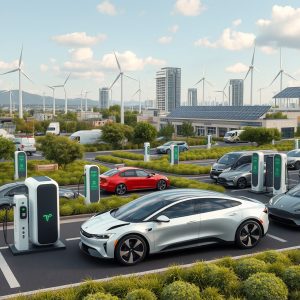
The Hydrogen Horizon: How Fuel Cells and Smart Infrastructure Are Accelerating the Shift to Zero Emission Mobility

In the quest for sustainable transportation, hydrogen fuel cells have emerged as a promising technology, offering a clean and efficient alternative to traditional combustion engines. Combined with smart infrastructure, these fuel cells are not only reducing emissions but also revolutionizing the way we think about mobility.
The Hydrogen Advantage
Hydrogen fuel cells work by combining hydrogen and oxygen to produce electricity, with water and heat as byproducts. This process is highly efficient and emits only water vapor, making it an attractive option for zero-emission vehicles. Unlike batteries, which require charging and have limited range, hydrogen fuel cells can be refueled quickly, offering a practical solution for long-distance travel.
Environmental Benefits
The environmental benefits of hydrogen fuel cells are substantial. They produce zero greenhouse gas emissions, reducing air pollution and combating climate change. Additionally, hydrogen can be produced from a variety of sources, including renewable energy, further enhancing its sustainability.
Technological Advancements
Recent advancements in hydrogen fuel cell technology have improved their efficiency and durability. Solid-state fuel cells, for instance, offer higher energy densities and faster start-up times. These innovations are making hydrogen fuel cells more viable for commercial applications.
Smart Infrastructure
Smart infrastructure plays a crucial role in the widespread adoption of hydrogen fuel cells. It includes refueling stations, charging networks, and data management systems that ensure a seamless user experience.
Refueling Stations
Hydrogen refueling stations are being developed to support the growing number of hydrogen-powered vehicles. These stations use advanced compression and storage technologies to ensure a reliable supply of hydrogen. The development of these stations is a significant step towards creating a comprehensive hydrogen infrastructure.
Charging Networks
Smart charging networks are essential for managing the energy flow in hydrogen-powered systems. These networks use real-time data to optimize energy distribution, ensuring efficient and sustainable operation. By integrating smart charging networks, we can maximize the benefits of hydrogen fuel cells.
Data Management Systems
Data management systems are critical for monitoring and controlling hydrogen fuel cell operations. These systems collect and analyze data to improve performance, detect issues, and enhance safety. By leveraging advanced data management, we can ensure the reliable and efficient operation of hydrogen-powered vehicles.
The Future of Hydrogen Mobility
The future of hydrogen mobility looks promising, with ongoing research and development efforts focused on improving fuel cell technology and expanding infrastructure. As these advancements continue, hydrogen fuel cells will play an increasingly important role in the transition to zero-emission mobility. The combination of hydrogen fuel cells and smart infrastructure is paving the way for a cleaner, more sustainable future.