
The Precision Path: How Strategic Engine Modifications Balance Power, Efficiency, and Longevity
Every engine has untapped potential, a hidden reservoir of performance waiting to be unlocked. The key lies not in brute force but in precision—strategic modifications that enhance power while preserving reliability. Whether you’re chasing track dominance, spirited driving, or simply a more responsive daily driver, understanding the science behind engine upgrades can transform your approach from guesswork to mastery.
The Foundation: Electronic Control Unit Remapping
At the heart of modern engine performance lies the Electronic Control Unit (ECU), the brain that governs fuel delivery, ignition timing, and boost levels. Factory settings are calibrated for broad compatibility, emissions compliance, and fuel economy, often leaving performance on the table. ECU remapping, or “chipping,” recalibrates these parameters to optimize power output. A well-executed tune can yield gains of 10-30% in horsepower and torque, particularly in turbocharged engines, by adjusting air-fuel ratios, ignition advance, and turbo boost pressure.
However, not all tunes are created equal. A generic off-the-shelf map may deliver short-term gains but risks long-term damage if it doesn’t account for your engine’s specific hardware or fuel quality. Custom dyno tuning, where the vehicle is tested under load and adjustments are made in real-time, ensures the ECU operates within safe limits while maximizing performance. This precision is especially critical when pairing a tune with other modifications, such as upgraded turbos or fuel injectors.
Forced Induction: Turbochargers and Superchargers
If the ECU is the brain, forced induction is the lungs of a high-performance engine. Turbochargers and superchargers compress intake air, allowing more oxygen to enter the combustion chamber and enabling the engine to burn more fuel for increased power. While both systems achieve the same goal, they operate differently and offer distinct advantages.
Turbocharger Upgrades
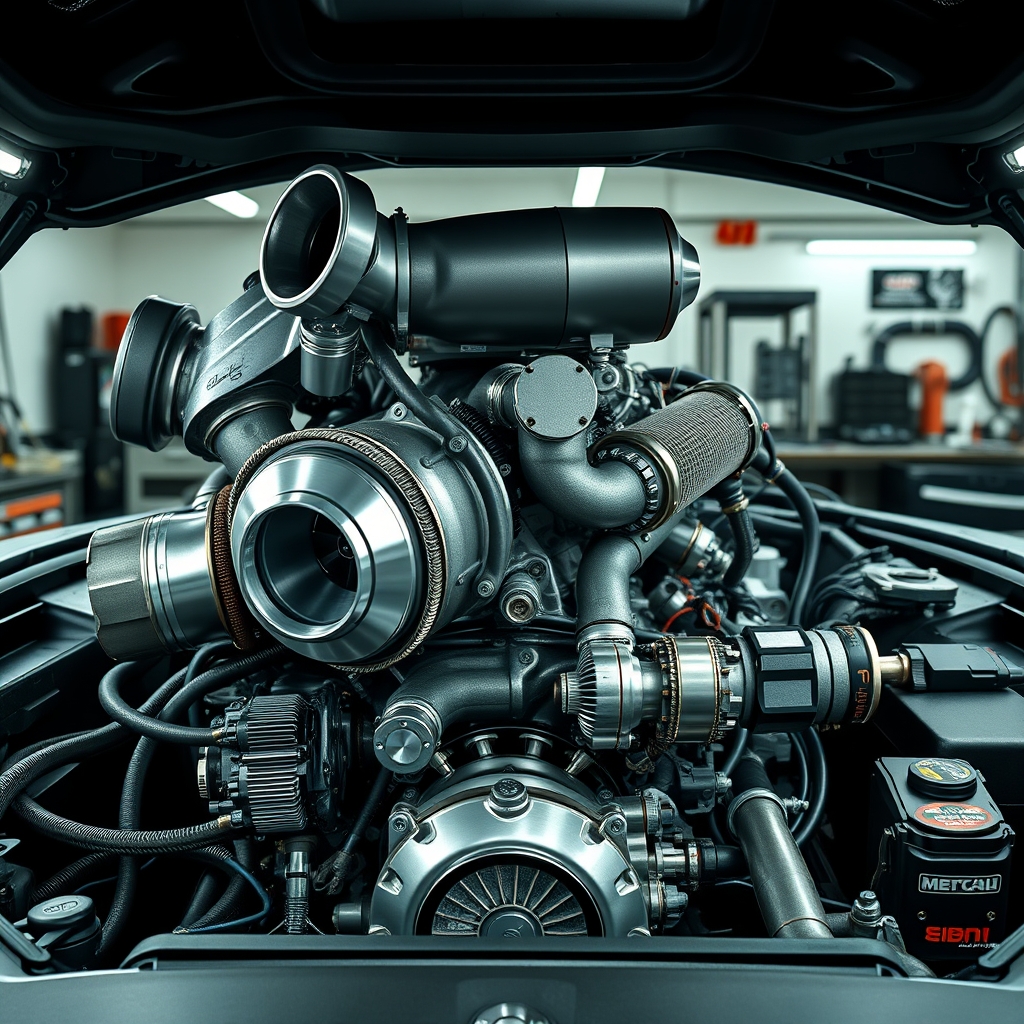
Turbochargers harness exhaust gases to spin a turbine, which compresses intake air. Upgrading to a larger or more efficient turbo can significantly increase power, but it’s not as simple as bolting on a bigger unit. Turbo lag—the delay between throttle input and power delivery—can worsen with larger turbos, making the car feel sluggish at low RPMs. To mitigate this, performance tuners often pair larger turbos with electronic boost controllers, which allow fine-tuning of boost levels across the RPM range. Additionally, upgraded intercoolers are essential to cool the compressed air, as hotter air is less dense and can lead to detonation or reduced power.
Supercharger Kits
Unlike turbos, superchargers are mechanically driven by the engine’s crankshaft, providing instant boost and eliminating lag. Supercharger kits are popular for naturally aspirated engines, as they deliver linear power delivery and can be easier to install. However, they place additional load on the engine, which can reduce efficiency and increase wear if not properly managed. Methanol injection systems are sometimes used alongside superchargers to cool the intake charge and suppress detonation, allowing for higher boost levels without sacrificing reliability.
Breathing and Fueling: The Lifeblood of Performance
An engine is essentially an air pump, and optimizing airflow is critical to unlocking power. Upgrades like cold air intakes, carbon fiber air intakes, and cylinder head porting reduce restrictions, allowing the engine to breathe more freely. Cold air intakes, for example, draw cooler, denser air from outside the engine bay, increasing oxygen availability for combustion. Meanwhile, cylinder head porting—where the intake and exhaust ports are smoothed and reshaped—improves airflow efficiency, reducing turbulence and enhancing power output.
But airflow alone isn’t enough. High flow fuel injectors and upgraded fuel pumps ensure the engine receives the precise amount of fuel needed to match the increased airflow. Without adequate fueling, the engine may run lean, leading to overheating, detonation, or catastrophic failure. Similarly, high-performance spark plugs with improved heat dissipation and conductivity ensure reliable ignition, especially under high boost or high RPM conditions.
Strengthening the Core: Internal Engine Upgrades
For those pushing their engines to the limit, internal upgrades are essential to handle the increased stress. Forged pistons, performance crankshafts, and upgraded valve trains are designed to withstand higher cylinder pressures and RPMs. Forged pistons, for instance, are stronger and more resistant to detonation than cast pistons, making them ideal for high-boost or high-compression applications. Performance camshafts, with their aggressive lift and duration profiles, optimize valve timing for maximum airflow, though they may sacrifice low-end torque for high-RPM power.
High compression pistons are another critical upgrade for naturally aspirated engines, as they increase thermal efficiency and power output. However, higher compression ratios require higher-octane fuel to prevent detonation, and the engine must be tuned accordingly. Throttle body upgrades can also enhance airflow, particularly in engines with restrictive factory setups, further improving throttle response and power delivery.
Exhaust Systems: The Path to Efficient Power
A performance exhaust system does more than just make your car sound aggressive—it reduces backpressure, allowing exhaust gases to exit the engine more efficiently. High-flow catalytic converters, mandrel-bent piping, and performance mufflers minimize restrictions, improving scavenging and increasing power. For turbocharged engines, a well-designed exhaust manifold or header can optimize exhaust gas flow to the turbo, reducing lag and improving spool-up.
Balancing power, efficiency, and longevity requires a holistic approach. Each modification must be carefully selected and integrated to complement the others, ensuring the engine operates as a cohesive system rather than a collection of parts. A well-tuned engine with upgraded internals, optimized airflow, and precise fueling can deliver exhilarating performance without sacrificing reliability. The key is precision—understanding how each component interacts and making adjustments that enhance the whole, rather than just one aspect. When done right, the result is an engine that doesn’t just perform better, but feels alive in a way that stock configurations never could.