The Quiet Revolution: How Solid State Batteries and Connected Car Technology Are Redefining the Future of Zero Emission Mobility
The automotive industry is undergoing a transformation so profound that it feels like stepping into a sci-fi novel. Yet, the changes are real, tangible, and happening at breakneck speed. At the heart of this revolution lies a combination of cutting-edge technologies that promise not just to redefine how we drive, but how we think about mobility itself. Among these, solid state batteries and connected car technology stand out as two of the most disruptive forces, quietly reshaping the landscape of zero emission vehicles and sustainable transportation.
The Leap Forward: Solid State Batteries
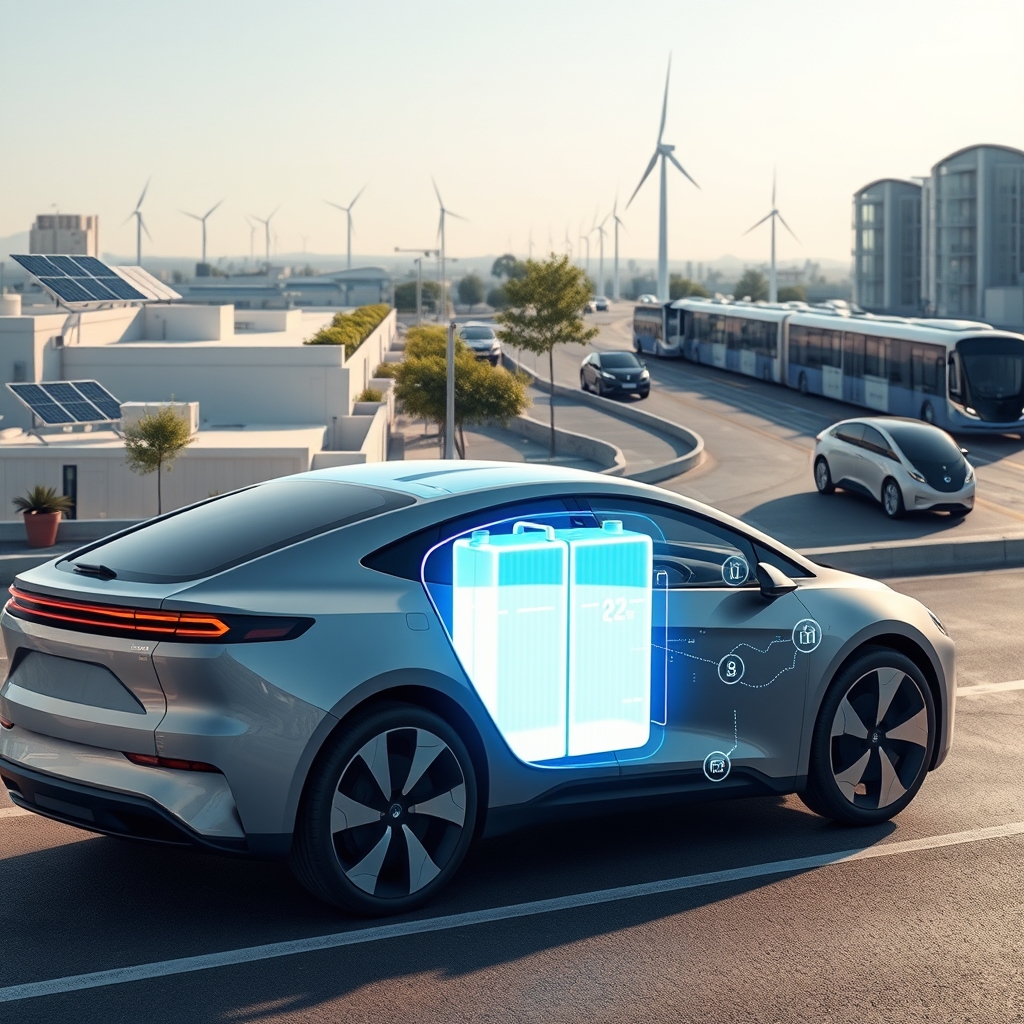
For decades, lithium-ion batteries have been the backbone of electric vehicles (EVs), offering a balance between energy density, cost, and performance. However, they are not without their limitations—range anxiety, charging times, and safety concerns have long been thorns in the side of EV adoption. Enter solid state batteries, a technology that could render these issues obsolete. Unlike their liquid-electrolyte counterparts, solid state batteries use a solid electrolyte, which significantly enhances energy density, safety, and longevity.
Imagine an EV that can travel over 600 miles on a single charge, recharges in under 15 minutes, and is far less prone to overheating or catching fire. This isn’t a distant dream but a near-future reality, thanks to advancements in solid state battery technology. Companies like QuantumScape, Solid Power, and even traditional automakers such as Toyota and BMW are pouring billions into research and development, aiming to bring these batteries to market within the next few years. The implications are staggering—not just for EVs, but for the entire energy storage industry, from consumer electronics to grid-scale solutions.
Why Solid State Batteries Matter for Zero Emission Mobility
The shift to solid state batteries isn’t just about improving performance; it’s about accelerating the transition to a carbon-neutral future. By addressing the key pain points of current EV technology—range, charging speed, and safety—solid state batteries could dramatically increase consumer adoption. More EVs on the road mean fewer emissions, less reliance on fossil fuels, and a significant step toward achieving global climate goals. Moreover, the increased energy density of these batteries could reduce the need for rare and environmentally damaging materials like cobalt, making EVs even more sustainable.
The Invisible Thread: Connected Car Technology
While solid state batteries are revolutionizing the hardware of EVs, connected car technology is transforming the software that powers them. Today’s vehicles are no longer just modes of transportation; they are sophisticated computers on wheels, capable of communicating with each other, with infrastructure, and even with the cloud. This connectivity is enabling a host of innovations that are making driving safer, more efficient, and more enjoyable.
Connected car technology encompasses everything from advanced driver-assistance systems (ADAS) to over-the-air (OTA) software updates, real-time traffic management, and predictive maintenance. For example, vehicles equipped with vehicle-to-everything (V2X) communication can receive alerts about accidents, road conditions, or even traffic light timings, allowing drivers to adjust their routes or speeds to avoid congestion and reduce fuel consumption. In the context of EVs, this connectivity is particularly powerful, enabling features like smart charging, where the car can automatically schedule charging during off-peak hours to take advantage of lower electricity rates and reduce strain on the grid.
The Role of AI and Big Data
At the core of connected car technology lies artificial intelligence (AI) and big data. Modern vehicles generate vast amounts of data—from driving patterns to battery performance—which can be analyzed to optimize everything from energy efficiency to predictive maintenance. AI algorithms can learn a driver’s habits and adjust settings accordingly, such as pre-conditioning the battery for optimal performance before a long trip or suggesting the most efficient route based on real-time traffic data. This level of personalization not only enhances the driving experience but also maximizes the efficiency and lifespan of the vehicle.
The Synergy of Solid State Batteries and Connected Car Technology
Individually, solid state batteries and connected car technology are game-changers. Together, they create a synergy that could redefine the future of mobility. For instance, the enhanced energy density of solid state batteries means that EVs can support more power-hungry features, such as advanced infotainment systems, autonomous driving capabilities, and even vehicle-to-grid (V2G) technology, where EVs can feed energy back into the grid during peak demand. Meanwhile, connected car technology can optimize the performance of these batteries, ensuring they operate at peak efficiency and longevity.
Consider the potential of an EV that not only charges faster and lasts longer but also communicates with smart grids to charge when renewable energy sources like wind and solar are most abundant. This kind of integration could make EVs a cornerstone of a smarter, more sustainable energy ecosystem, where vehicles are not just consumers of energy but active participants in its distribution and management.
Overcoming the Challenges
Of course, the road to this future is not without its challenges. Solid state batteries, while promising, are still in the developmental stage, and scaling up production to meet demand will require significant investment and innovation. Similarly, connected car technology raises concerns about data privacy and cybersecurity. As vehicles become more connected, they also become more vulnerable to hacking and other cyber threats. Addressing these issues will require collaboration between automakers, tech companies, and policymakers to establish robust standards and regulations.
Moreover, the transition to this new era of mobility will require a shift in consumer behavior. Drivers will need to adapt to new technologies, from understanding how to interact with autonomous features to trusting their vehicles to make decisions on their behalf. Education and awareness will be key to ensuring a smooth transition and widespread adoption.
The Broader Impact on Sustainable Transportation
The implications of these technologies extend far beyond the automotive industry. Solid state batteries and connected car technology are poised to play a crucial role in the broader push toward sustainable transportation. For example, the increased range and efficiency of EVs could make electric trucks and buses a more viable option for long-haul and public transportation, sectors that have traditionally been difficult to decarbonize. Meanwhile, connected car technology can help reduce traffic congestion, lower emissions, and improve overall transportation efficiency by optimizing routes and reducing idle time.
In urban areas, the combination of these technologies could pave the way for smarter, more sustainable cities. Imagine a future where EVs communicate with traffic lights to reduce wait times, where autonomous shuttles provide on-demand transportation, and where renewable energy sources power a fleet of zero-emission vehicles. This vision is not as far-fetched as it may seem, and the groundwork is already being laid in cities around the world, from Oslo to Singapore.
The journey toward a zero-emission future is not just about replacing internal combustion engines with electric motors or hydrogen fuel cells. It’s about reimagining the entire ecosystem of mobility, from the vehicles we drive to the infrastructure that supports them. Solid state batteries and connected car technology are two of the most exciting developments in this space, offering a glimpse into a future where transportation is not only cleaner but also smarter, safer, and more efficient. As these technologies continue to evolve, they will undoubtedly play a pivotal role in shaping the next chapter of sustainable mobility, bringing us closer to a world where the roads are quieter, the air is cleaner, and the possibilities are limitless.